
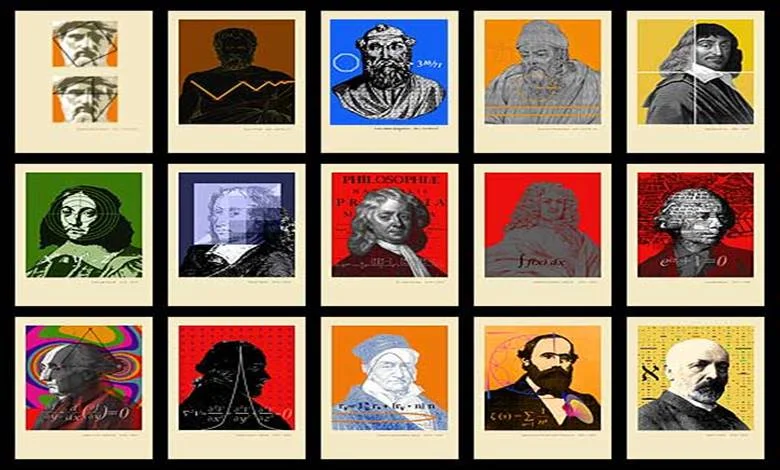
The greatest mathematicians in history are the architects of modern thought, and their ideas, from Pythagoras to Euler, still govern how we measure, compute, and understand the universe. These ten genius minds worked across centuries and continents, each leaving a permanent mark on science, technology, and daily life. Their stories are not just about numbers; they are about human curiosity, persistence, and the breathtaking beauty of logical discovery.
The short version
This article profiles ten of the greatest mathematicians in history, from ancient Greece to the eighteenth century. It covers their key contributions, including geometry, algebra, calculus, and number theory, and explains how these discoveries shaped modern mathematics and science. The list spans roughly 2,500 years of intellectual achievement.
- Pythagoras, in ancient Greece around 500 BCE, established a school that treated numbers as the fundamental reality and is credited with the famous theorem about right triangles.
- Euclid, working in Alexandria around 300 BCE, wrote the Elements, a thirteen-book treatise that became the standard geometry textbook for over two thousand years.
- Archimedes, from Syracuse in the third century BCE, advanced geometry and physics, famously discovering a method for measuring volume while taking a bath.
- Al-Khwarizmi, in ninth-century Baghdad, wrote a text on solving equations that introduced systematic methods, giving algebra its name.
- Leonhard Euler, in eighteenth-century Europe, produced groundbreaking work across mathematics, including the notation for functions and the number e.
Greatest Mathematicians in History: 10 Genius Minds
Mathematics hides in every corner of nature and the human-made world, and a handful of extraordinary minds have spent their lives pulling it into the light. From ancient Greece to the 18th century, ten thinkers stand apart for how they reshaped not just numbers, but the very way humanity thinks. Their work turned abstract ideas into tools we still use every single day.
These ten figures didn't just solve problems. They redefined what a problem even was, inventing entire branches of mathematics that had never existed before. Each one built on the last, creating a chain of insight that reaches all the way to your smartphone.
Pythagoras (c. 570–495 BC): The Man Behind the Theorem
Most students meet Pythagoras only through his famous theorem about right triangles, but the man himself was far stranger and more fascinating than any geometry lesson suggests. Historians agree he was born around 570 BC on the island of Samos, one of the great centers of the ancient Greek world. According to the original account, he traveled widely in his youth, studying with philosophers and sages in Egypt and Mesopotamia, absorbing knowledge about mathematics, astronomy, and religion that would shape his later ideas.
Pythagoras was no narrow specialist. As the story goes, he was among the first thinkers to propose that the Earth is round, though the lack of primary sources makes this attribution uncertain. Contrary to the popular version, records suggest the division of the world into five climate zones based on latitude circles is more reliably credited to later thinkers like Parmenides or Aristotle. Similarly, the discovery that the Morning Star and Evening Star are the same celestial body, Venus, was known before Pythagoras and cannot be uniquely claimed by him. What remains certain is that he saw mathematics as a window into the hidden order of nature, a holistic vision that made him far more than a theorem with his name attached.
Euclid (c. 300 BC): The Father of Geometry
Euclid's life is a mystery, but his legacy is one of the most solid structures in all of human knowledge. Widely believed to have worked in Alexandria, Egypt around 300 BC, he produced the Elements, a systematic collection of definitions, axioms, and theorems that served as the primary source for mathematics for over two millennia. It wasn't just a geometry textbook; it defined the method of mathematical thinking itself.
Contrary to the popular version, Euclid's birthplace is actually unknown, though he certainly worked in Alexandria. As the story goes, he may have studied at Plato's Academy in Athens, but this remains speculative with no direct evidence. What we know for certain is that his axiomatic approach was a turning point. Starting from a handful of self-evident truths, he showed that complex theorems could be derived through pure logic, laying the foundation for deductive reasoning that would eventually underpin modern science itself.
Archimedes (c. 287–212 BC): The Ancient Genius Who Measured the Sphere
Picture a man sprinting naked through the streets of Syracuse, shouting "Eureka!" after figuring out how to detect fraud in a golden crown. That's the Archimedes everyone knows, but the real man was far more impressive. Born around 287 BC in the Greek city-state of Syracuse on the island of Sicily, he became one of the greatest mathematicians and engineers the ancient world ever produced, a figure so revered that his portrait appears on the Fields Medal, mathematics' most prestigious award.
Archimedes was one of the first to study pi, developing a rigorous method to bound its value between two numbers. He was also the first to find and prove the formulas for the surface area and volume of a sphere, a feat that required genuine mathematical genius. His method of exhaustion, used to calculate areas bounded by parabolic curves, anticipated integral calculus by nearly two thousand years. When Roman soldiers invaded Syracuse in 212 BC, they killed a man whose mind had already mapped out concepts the world wouldn't fully grasp for millennia.
Al-Khwarizmi (c. 780–850): The Man Who Gave Us Algorithms
A thousand years before the internet, a Persian scholar named Muhammad ibn Musa al-Khwarizmi laid the groundwork for the algorithms that now run our digital lives. The word "algorithm" itself derives from the Latinized form of his name, algorithmi, and "algebra" is closely tied to his work as well. According to the original account, he was born between roughly 780 and 850 in the Khwarazm region, south of the Aral Sea in modern-day Uzbekistan, though the exact dates and birthplace remain uncertain.
Al-Khwarizmi worked during the Abbasid Caliphate, a golden age of scientific advancement. He corrected errors in Ptolemy's famous Geographia to make world maps more accurate, and he studied trigonometry, though contrary to the popular version, the first known tangent tables are actually attributed to Indian mathematicians, not to him. His most consequential contribution came through a book introducing the Hindu numeral system, which later reached Europe through Fibonacci and gradually replaced Roman numerals to become the foundation of modern arithmetic. Every time you type a search query, an algorithm bearing his intellectual DNA is working behind the scenes.
Leonardo Pisano, Known as Fibonacci (c. 1170–1250)
Born in Pisa, Italy, around 1170, Leonardo Pisano traveled widely with his father, a diplomat, and studied at an accounting school in Bugia, North Africa. It was there that he encountered the Hindu-Arabic numeral system, and compared to Roman numerals, its simplicity and functionality struck him immediately. In 1202, he wrote Liber Abaci, explaining these numerals and their uses in detail, a book that would transform European mathematics.
The sequence that made him famous, where each number equals the sum of the two before it (0, 1, 1, 2, 3, 5, 8, 13, 21, 34...), appears throughout the natural world. As the story goes, the Indian scholar Pingala may have noticed related patterns around 200 BC, but the explicit formulation is debated. What's certain is that Fibonacci's detailed study of the sequence in his book is why we call it by his name today. From sunflower spirals to financial forecasting, that simple pattern still shapes how we understand growth and prediction.
René Descartes (1596–1650): The Philosopher Who Bridged Algebra and Geometry
René Descartes was born on 31 March 1596 in La Haye, France, and died in 1650 in Sweden, but in between he changed the world twice over. As a philosopher he gave us "Cogito, ergo sum" ("I think, therefore I am") and the mind-body dualism that philosophers still debate. As a mathematician, he developed analytic geometry, bridging algebra and geometry so that shapes could be expressed as equations and equations as shapes.
The Cartesian coordinate system, named after his Latinized name, allows every point on a plane to be defined numerically. That seemingly simple idea became the foundation of modern physics, engineering, and computer graphics. When you plot a graph or navigate a GPS map, you're using Descartes' insight from 1637, a bridge he built between two worlds of mathematics that had never properly met.
Isaac Newton (1643–1727) and Gottfried Leibniz (1646–1716): Calculus's Double Birth
No list of great mathematicians would be complete without Isaac Newton, who gave mathematics the ability to systematically describe change through space and time by inventing calculus. Born in 1643 in England, Newton was simultaneously building his theories of physics while developing the mathematical tools to express them. Meanwhile, in Germany, Gottfried Leibniz independently developed calculus during the same period, leading to a famous priority dispute that divided mathematicians for generations.
What's not disputed is that many of the symbols we still use today come from Leibniz: the "d" for derivatives, the elongated "∫" for integrals, and countless other fundamental notations. Leibniz was a rationalist who believed deeply in building formal symbolic systems, an approach that would flower in the late 19th and early 20th centuries with modern logic and set theory. Two brilliant minds, working separately, arrived at the same revolutionary mathematics, and we still use one man's notation to express the other's discoveries.
Carl Friedrich Gauss (1777–1855): The Prince of Mathematics
Carl Friedrich Gauss earned the title "Prince of Mathematics" through achievements that began almost before he could walk. Born in 1777, he was correcting his father's calculations at age five, showing an attention to numbers that bordered on the supernatural. In 1796, not 1798 as sometimes claimed, he constructed a regular 17-gon using only a compass and straightedge, the greatest advance in polygon construction since Euclid's geometry roughly two thousand years earlier.
At age 21, he completed Disquisitiones Arithmeticae, laying the foundations of number theory, though the work wasn't published until he was 24. He also developed what we now call the fundamental theorem of algebra, proving that every polynomial has at least one root, though the theorem was known earlier and his contribution was providing the first rigorous proof. Remarkably, Gauss refused to publish many of his discoveries during his lifetime. Only after his death in 1855 did researchers find notebooks full of breakthroughs he'd kept hidden for years, a private treasure trove of mathematical genius.
Leonhard Euler (1707–1783): The King Who Gave Us Our Symbols
If Gauss was the Prince of Mathematics, Leonhard Euler was its undisputed King. Born in 1707 in Basel, Switzerland, Euler's most lasting contributions came through the systematic notation he brought to mathematical expression. Today's fundamental symbols flow directly from his work: f(x) for functions, sin, cos, and tan for trigonometry, the number e as the base of natural logarithms, the Greek letter Σ for summation, i for the imaginary unit, and even the symbol π for the ratio of a circle's circumference to its diameter.
While some of these notations were used earlier by others, Euler standardized and popularized them into the unified system we use today. His work spanned calculus, topology, number theory, analysis, and graph theory, building the very structure of modern mathematics. He was astonishingly prolific, publishing more than any mathematician before or since, and his influence extends into every branch of the field. When you write a formula today, you're almost certainly using Euler's alphabet.
Blaise Pascal (1623–1662): The Gambler Who Founded Probability
French mathematician Blaise Pascal, born in 1623, contributed to multiple fields of mathematics with remarkable elegance. His famous Pascal's Triangle offers a beautifully simple method for calculating binomial coefficients, essential in algebra and countless other areas. He also developed one of the world's first mechanical calculators, though contrary to the popular version, a similar device by Wilhelm Schickard predates his work, making Pascal's machine one of the earliest rather than the very first.
Pascal's most profound legacy, however, lies in probability theory, which he co-founded through correspondence with Pierre de Fermat. Their exchange of letters on games of chance laid the foundation for understanding chance and risk through numbers. Later in life, a religious experience led him to formulate Pascal's Wager, a philosophical argument in his Pensées that uses probability and expected value to reason about belief in God. He showed that probability wasn't just for games, but for the most profound decisions of human existence.
These ten minds, spanning more than two thousand years, each added a new layer to humanity's mathematical understanding. From Pythagoras on his island to Euler in his study, they built a structure of knowledge that supports everything from bridges to computer code. The list could easily have included more, but these ten represent the essential breakthroughs that made modern mathematics possible.
Editor's note: Where historical details remain uncertain, they are presented as such, and all descriptions of discoveries are based on the most widely accepted accounts.
What are your thoughts on this topic?
Every article is an open conversation. Whether you have a counter-argument, a local example, or a different perspective based on your own experience, your contribution makes this space better.
0 Comments