
The beer before bread hypothesis argues that the desire for fermented grain drinks, not the need for loaf bread, motivated early humans to start farming and settle down, with the 11,000-year-old site of Göbekli Tepe in southeastern Turkey serving as a key piece of evidence. This bold idea flips the traditional story of civilization on its head, suggesting our ancestors were driven by a thirst for communal celebration rather than simple survival. It is a narrative that makes the distant past feel surprisingly relatable, as it places social bonding and ritual at the very heart of human progress.
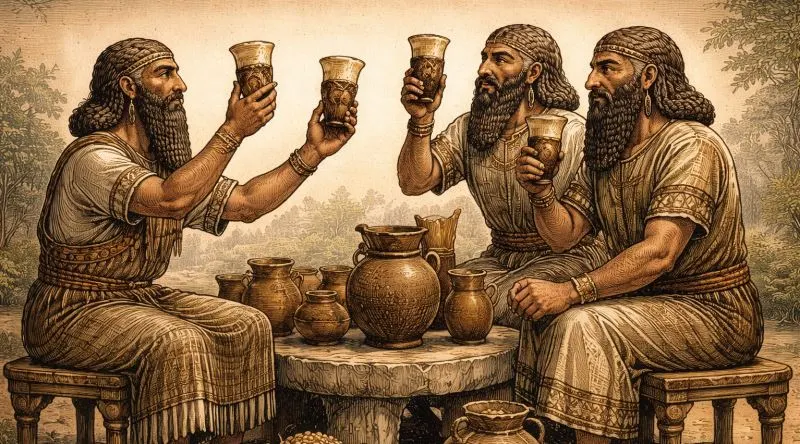
The short version
The beer before bread hypothesis proposes that early humans began cultivating grain primarily to brew alcoholic beer for feasts and rituals, rather than to bake bread. The massive stone enclosures at Göbekli Tepe, built by hunter-gatherers around 9500 BCE, contain large stone vats that researchers believe may have been used for brewing, suggesting that the desire for beer helped spark the shift to agriculture and permanent settlement.
- Göbekli Tepe is a hilltop sanctuary in southeastern Turkey dated to roughly 9600–8200 BCE, built by pre-agricultural hunter-gatherers.
- The site features massive T-shaped limestone pillars arranged in circles, some weighing up to 20 tons, which required organized labor to erect.
- Large stone troughs and vats found at the site are interpreted by some archaeologists as possible brewing vessels for beer production.
- Archaeologist Brian Hayden has championed the beer before bread hypothesis, arguing that feasting and ritual drinking drove the domestication of grains.
- The site's excavator, Klaus Schmidt, suggested that the monumental construction effort necessitated feeding and entertaining large workforces, possibly with beer.
The Story We Were Told About Bread and Farming, and Why It May Be Wrong
The beer before bread hypothesis flips the origin story of civilization on its head: it argues that early humans didn't settle down and start farming because they were hungry for bread, but because they craved beer. This recognized academic idea, often tied to anthropologist Solomon Katz, suggests that our ancestors' taste for fermented grain may have driven the agricultural revolution. It's a theory that turns a simple survival story into something far more social and pleasurable.
For generations, the standard schoolbook narrative has gone like this: humans got hungry, discovered wild wheat, figured out how to bake it into bread, and then settled into villages to grow more. It's a tidy, logical progression. But according to the researchers who champion the beer-first view, that account is largely incomplete, even possibly wrong. The real engine of civilization, they argue, wasn't a full stomach. It was the desire for shared celebration, ritual drinking, and the social glue that alcohol provided around a communal fire.
That reframing matters because it changes why we think our ancestors did anything. If the beer before bread hypothesis holds, then the first farmers weren't rational calorie-counters grinding away at grain for survival. They were party planners, motivated by the promise of something intoxicating to share with their neighbors.
Why Wild Wheat Was a Terrible Deal for Bread Lovers
Picture yourself as a hunter-gatherer in the year 10,000 BCE, staring at a patch of wild wheat. The romantic version of history says you'd drop everything to start farming it for bread. But the math simply didn't work: the wild wheat varieties available 12,000 years ago were so thin and scraggly that grinding, kneading, and baking them into bread likely consumed more energy than the finished loaf ever gave back. According to the original account, a rational person looking for calories would have walked right past that field.
This is where the beer before bread hypothesis gets interesting. It flips the entire story of civilization on its head. Instead of hunger driving people to domesticate grains, it suggests that the desire for something far more social and pleasurable, namely fermented drink, was the real motivator. Wild grains may have been a lousy source of bread, but they were perfectly serviceable for brewing. The effort-to-reward ratio changes completely when the payoff is a shared, intoxicating beverage rather than a dense, disappointing loaf.
Archaeologists Brian Hayden and Klaus Schmidt have both championed variations of this idea. Hayden argued that beer acted as a social lubricant that made the grueling labor of early agriculture worthwhile. Schmidt, who excavated at Göbekli Tepe in southeastern Turkey, suggested that the massive stone vessels found there may have held brewing operations. The site dates to roughly 9600 BCE, well before full-scale agriculture took hold, yet it required enormous coordinated effort to build. What could have motivated that kind of cooperation? The answer, according to this line of thinking, might have been the promise of a feast with plenty of beer at the center of it.
Contrary to what you might hear about oxalate residues proving large-scale brewing at Göbekli Tepe, the evidence is actually more limited. Oxalate, a byproduct of beer production, has been found in a few of those stone vessels, but the interpretation remains contested. It suggests brewing happened there, not that it was an industrial-scale operation feeding thousands. Still, even modest brewing would have been a powerful draw.
And ancient beer was no joke nutritionally. Fermentation did double duty: it killed off pathogens in the water and boosted B vitamin content. So that prehistoric pint was arguably a safer, more nourishing choice than the bread made from those same miserable grains. It was liquid food with a buzz attached.
Beer as the Motivational Tool: What Hayden and Schmidt Argued
The idea that beer, not bread, lured hunter-gatherers into farming has two prominent academic champions: archaeologist Brian Hayden and Klaus Schmidt, the German archaeologist who excavated Göbekli Tepe in southeastern Turkey. Both argued that the social pull of fermented drink, served at massive communal feasts, was the real engine behind the agricultural revolution.
Hayden's case rests on the feasting angle. For hunter-gatherers, the heavy grind of tending wild grain fields made little sense as a survival strategy. But when framed as a means to produce large quantities of alcoholic drink for communal celebrations, the calculus shifted. These feasts bonded society, created obligations, and gave people a tangible, pleasurable reason to invest in agriculture. The beer before bread hypothesis suggests that social reward, not hunger, tipped the balance toward settlement.
Schmidt brought this argument to Göbekli Tepe, the 11,000-year-old stone temple complex in Şanlıurfa Province, Turkey, where massive T-shaped pillars and stone enclosures suggest organized ritual gatherings long before full farming took hold. Schmidt speculated that beer brewing may have been part of the site's purpose, though he remained cautious in his claims. As the story goes, the site's builders may have gathered wild grain by the ton to brew for their ceremonies, even before they cultivated fields systematically.
That cautious framing matters. Contrary to some popular retellings, oxalate residues (a chemical byproduct of beer production) found in stone vessels at Göbekli Tepe are limited to a few containers, and the interpretation remains contested. The evidence hints at brewing, but it does not prove the kind of large-scale industrial beer production that some versions of the story suggest.
What the two archaeologists shared was a conviction that ancient beer was no mere indulgence. Fermentation sanitized water and boosted B vitamins, making it a genuinely nutritious drink for its time. The motivational power of that beverage, they argued, was strong enough to nudge wandering bands of foragers into the fields, and eventually into the first permanent settlements.
Göbekli Tepe: Stone Vessels, Oxalate Residues, and the 'Large-Scale' Question
The stone vessels at Göbekli Tepe, a monumental hilltop sanctuary built in southeastern Turkey around 9600 BCE, hold chemical traces that have fueled the beer before bread hypothesis. But the popular story that these residues prove ancient people threw massive, large-scale brewing parties needs a serious reality check.
What researchers actually found were oxalate deposits, a natural byproduct of fermentation, clinging to the insides of a few large stone containers. Oxalates form when barley or other grains are mashed and fermented, so their presence does suggest that the people who gathered at this pre-agricultural site were brewing something alcoholic. But here is where the story gets tricky: those residues appear in only a handful of vessels, not across the site. Archaeologists who study the evidence carefully caution that calling this "large-scale" production overstates what the data supports. A few beer-making vats do not necessarily equal an industrial operation feeding hundreds.
What the site does show, without exaggeration, is that hunter-gatherers hauled astonishing quantities of wild grain to this hilltop for communal gatherings, all before farming had taken root anywhere in the region. The effort involved in collecting, processing, and brewing with wild grains, which are notoriously low-yield and labor-intensive, points to something deeply social. People were not just feeding themselves. They were organizing massive collective events centered on food and drink, and beer was very likely part of the draw. The oxalate evidence, while contested in its scale, remains a genuine clue that the urge to brew, not just to bake, helped pull early humans toward the settled lives that would eventually transform civilization.
Was Ancient Beer Actually Good for You?
Yes, in practical terms, ancient beer was far more than "empty calories", fermentation could sanitize contaminated water and boost B vitamins, making it a genuinely nourishing "liquid food" for its time. That said, calling it simply "healthier than bread" oversimplifies things. Both were essential, but beer did double duty as both hydration and nutrition in a way bread simply couldn't match.
Think about what a Neolithic person was actually drinking. Water sources were risky, untreated rivers and streams could carry pathogens that caused debilitating illness. The fermentation process that created beer effectively killed off many of those dangerous microbes, giving people a safer way to hydrate. At the same time, the yeast working through the grain was synthesizing B vitamins, particularly B-complex nutrients that supported energy metabolism and overall health. For a society without clean water infrastructure, that combination was nothing short of transformative.
But let's not oversell it. The claim that beer was "healthier than bread" needs a heavy dose of nuance. Bread provided dense carbohydrates and fiber that beer, even thick and porridge-like ancient brews, couldn't fully replace. They served different nutritional roles, beer as a safe, vitamin-rich beverage, bread as a calorie-dense staple. The real point is that ancient beer wasn't the frivolous indulgence we might imagine. It was a practical, life-sustaining product born of necessity and ingenuity, one that made survival easier in a world where every meal was a gamble.
So Did We Farm for Beer? The Bigger Picture
The idea that our ancestors settled down and started farming because they wanted a reliable supply of beer, not bread, is a serious academic proposal known as the beer before bread hypothesis. It is a strong possibility, but it remains a debated theory rather than settled fact. If it holds, then the entire edifice of modern civilization may rest on a very human desire for an evening drink.
Think about what the hypothesis actually claims. The standard story we learned in school goes like this: people got hungry, figured out grain, baked bread, and decided to stay put. The beer before bread hypothesis flips that sequence. It suggests that the motivation for the back-breaking labor of early farming was not a full stomach but a festive one. Archaeologists Brian Hayden and Klaus Schmidt have both argued, in different ways, that beer was the social lubricant that made agriculture worth the effort. Hayden saw it as a tool for feasting and building alliances. Schmidt, who worked at the massive stone temple complex of Göbekli Tepe in southeastern Turkey, suggested that the people gathering there may have been brewing beer on a grand scale.
That site is central to the debate. Göbekli Tepe dates to around 9600 BCE, and its monumental pillars were built by hunter-gatherers who had not yet domesticated crops. According to some interpretations, the large stone vessels found there hold oxalate residues, a byproduct of beer production. But the evidence is thinner than the popular version suggests. The residues appear in only a few vessels, and the interpretation is contested, so describing it as proof of large-scale brewing before agriculture overstates what we actually know.
What is clearer is that ancient beer was no joke nutritionally. Fermentation sanitized the water, killing pathogens, and boosted B vitamins in the process. In a world without clean drinking water, that made beer a genuinely valuable liquid food, not just an intoxicant.
So here is the provocative picture that emerges. The first farmers may not have been driven by hunger at all. They may have been driven by the desire to host better parties, to strengthen social bonds, and to enjoy a safe, nutritious, mildly intoxicating drink. The fields, the granaries, the villages, the cities, the empires, all of it may trace back to a simple craving. Modern civilization, in this reading, owes a quiet debt to our ancestors' wish for a cold one at the end of the day.
FAQ: What Is the Beer Before Bread Theory?
What is the beer before bread hypothesis?
The beer before bread hypothesis proposes that the desire for beer, not bread, motivated early humans to adopt farming and settle into permanent communities. Rather than hunger driving grain cultivation, the theory suggests that the social appeal of fermented drinks sparked the agricultural revolution that led to civilization.
Who proposed the beer before bread theory?
The beer before bread theory is often associated with anthropologist Solomon Katz, who argued that beer may have driven grain domestication. Archaeologists Brian Hayden and Klaus Schmidt also supported the idea, suggesting that alcoholic beverages served at communal feasts motivated hunter-gatherers to take up the heavy labor of farming.
What evidence of beer was found at Göbekli Tepe?
At Göbekli Tepe, the 11,000-year-old temple complex in southeastern Turkey, researchers found oxalate residues, a byproduct of beer production, in some stone vessels. The interpretation remains contested among scholars, and claims of large-scale brewing there go beyond what the limited evidence actually supports.
Was ancient beer healthier than bread?
Ancient beer offered real nutritional benefits that modern beer lacks. The fermentation process sanitized water by killing harmful microbes and increased B vitamin content, making it a genuinely nourishing liquid food for its time. However, declaring it simply "healthier than bread" oversimplifies a complex nutritional picture.
Editor's note: Certain details regarding the specific function of the stone vats at Göbekli Tepe remain unconfirmed, and the beer before bread hypothesis is presented here as a leading scholarly interpretation rather than settled fact.
What are your thoughts on this topic?
Every article is an open conversation. Whether you have a counter-argument, a local example, or a different perspective based on your own experience, your contribution makes this space better.
0 Comments