
Sea salt vs table salt is a nutritional face-off where sea salt isn't healthier, despite its trendy reputation, both are roughly 98 percent sodium chloride, and your body processes them nearly identically. The real difference lies in texture, trace minerals, and processing, not in health benefits, so understanding the science can save you from falling for clever marketing.
The short version
Sea salt and table salt both contain about 40 percent sodium by weight, making them nutritionally equivalent. Sea salt comes from evaporated seawater and retains trace minerals, while table salt is mined and often fortified with iodine. Neither is healthier, and excess sodium from either can raise blood pressure.
- Sea salt is produced by evaporating seawater, leaving behind sodium chloride along with small amounts of minerals like magnesium, calcium, and potassium.
- Table salt is typically mined from underground salt deposits and processed to remove impurities, then often fortified with iodine to prevent thyroid deficiency.
- Both salts contain roughly 2,300 milligrams of sodium per teaspoon, so swapping one for the other does not reduce your sodium intake.
- The larger, coarser crystals of sea salt can make it taste saltier per pinch, which may lead some people to use less, but this effect varies by individual.
- The World Health Organization recommends consuming less than 2,000 milligrams of sodium per day for adults, regardless of the salt type chosen.
The Premium Price Tag on a Familiar Mineral
Walk into any grocery store and you will spot it quickly: a box of sea salt sitting on the shelf with a price tag that makes the plain table salt next to it look like a bargain. That price gap is no accident. In countries without direct access to the sea, sea salt is often marketed and perceived as more natural and healthier, which pushes its cost higher and makes shoppers treat it as a premium product.
The perception is powerful, but it does not hold up under scrutiny. Commercially sold salts, whether harvested from the ocean or mined from underground deposits, are at least 99% sodium chloride. That means the sea salt vs table salt debate comes down to taste, texture, and processing, not nutrition. By weight, both contain roughly the same amount of sodium, so your body cannot tell the difference once the crystals dissolve. The real question is not which one you choose, but how much of it you use.
Why Sea Salt Isn't the Healthier Choice
Sea salt gets all the good press, but when it comes to your health, it is not the winner the marketing suggests. The truth is that sea salt and table salt deliver the same basic nutritional value, containing nearly identical amounts of sodium by weight. The real differences between the two are about taste, texture, and how they are processed, not about which one is better for your body.
Walk down any grocery aisle and you will see it: the sea salt, often in a fancy jar or grinder, priced noticeably higher than the humble box of table salt. Especially in countries without direct access to the sea, that price gap widens, and shoppers assume the premium means premium health benefits. The perception sticks, even though the science tells a different story.
Commercially sold salts, whether they come from the ocean or from deep underground, are at least 99% sodium chloride. That means the core of every grain, regardless of its source, is essentially the same compound. The fancy fleur de sel and the cheap iodized salt are both overwhelmingly just salt. So where do the real differences actually show up? In the kitchen, not in the bloodstream.
Sea salt is made by evaporating ocean water or the water of salty lakes, and it goes through minimal processing. That light touch leaves behind tiny amounts of trace minerals like magnesium, calcium, and potassium, which give it a slightly different color and a more complex flavor. Table salt, on the other hand, is usually mined from underground salt deposits, refined to strip away those extra minerals, and then fortified with iodine to prevent iodine deficiency.
Here is a twist that surprises people: all salt comes from the sea. Those underground deposits that table salt is mined from? They are the remnants of ancient seas and salt lakes that evaporated millions of years ago. So the difference is not origin, it is age. Your table salt just crystallized from a prehistoric ocean instead of a modern one.
That difference in crystal size is what you actually notice when you cook. Big, flaky sea salt crystals do not dissolve instantly, so when you sprinkle them on a finished dish, they hit your tongue in concentrated bursts that taste saltier. But the moment salt dissolves, whether in a pot of soup or boiling pasta water, the crystal size stops mattering entirely. Once it breaks apart into sodium and chloride ions in the water, there is no memory of whether it started as a giant flake or a fine grain.
So when you are deciding between the two at the store, know this: the choice is about crunch and mouthfeel, not about your health. The World Health Organization recommends keeping daily salt intake to 5 grams as the ideal limit. That number applies equally to both kinds, because both are roughly 40% sodium by weight. The healthiest choice is simply the one you use the least.
How Sea Salt and Table Salt Are Actually Made
Sea salt starts its life as simple ocean water or water from salty lakes, left to evaporate under the sun until only crystals remain. Table salt, by contrast, is usually mined from underground salt deposits that formed millions of years ago. Both end up as sodium chloride, but the journey each takes to your kitchen is completely different.
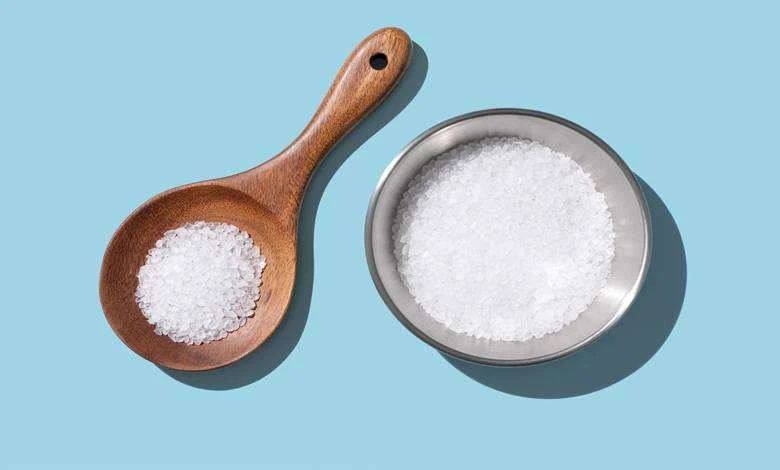
When seawater evaporates, it leaves behind those chunky, irregular crystals you see in fancy salt grinders. This process requires very little intervention, which is why sea salt keeps small amounts of trace minerals like magnesium, calcium, and potassium. These minerals give it a slightly different color and a more complex flavor than its refined cousin.
Table salt, the fine white powder in most salt shakers, comes from a much older source. Underground salt beds are the remnants of ancient seas and salt lakes that dried up eons ago. During production, manufacturers strip away the extra minerals and often add iodine to prevent iodine deficiency. So while the two salts look and taste different, every grain of table salt is also, in a sense, sea salt, just from a sea that vanished long before humans walked the earth.
Here is where the sea salt vs table salt debate gets interesting. Commercially sold salts, regardless of origin, are at least 99% sodium chloride. That means the trace minerals in sea salt exist in such tiny amounts they barely register nutritionally. Both types contain roughly the same sodium by weight, about 40%, making their basic nutritional value essentially identical.
The real difference comes down to texture. Big sea salt crystals deliver a more intense burst of saltiness when sprinkled on food before it dissolves. But drop those same crystals into a pot of soup or pasta water, and the size stops mattering completely. Once salt dissolves into sodium and chloride ions, it no longer remembers whether it started as a delicate flake or a chunky rock.
The Real Difference Comes Down to Crystal Size
Here is where the sea salt vs table salt debate collapses into something you can actually see and feel. When you sprinkle salt directly onto food and it lands undissolved on the surface, larger crystals generally deliver a more intense, punchy salty hit. That is why a flaky sea salt scattered over a steak right before serving tastes so dramatically different from the fine white powder you shake into a soup pot.
The magic lives in the geometry, not the origin. A big, jagged crystal dissolves slowly on your tongue, releasing its saltiness in waves. A fine grain melts almost instantly, spreading its flavor thin and fast. But here is the twist: the moment salt fully dissolves, crystal size stops mattering completely. Stir a spoonful of coarse sea salt into a simmering pot of soup or a kettle of pasta water and it breaks apart into the exact same sodium and chloride ions as the cheapest table salt on the shelf. Salt has no memory. Once those ions separate and mingle with the liquid, the original crystal shape, size, and source are utterly irrelevant. What counts now is simply how much you measured out.
What Actually Matters: How Much Salt You Eat
Whether your salt comes from a sea-salt grinder or a classic blue table-salt box, the real question is how much of it lands on your plate. The World Health Organization sets the ideal daily limit at 5 grams of salt, roughly one level teaspoon. That single number matters far more than which salt you choose.
Different health sources suggest anywhere from 3 to 10 grams per day, a wide range that reflects how much uncertainty still surrounds our true sodium needs. But on one point experts agree completely: people in Europe and North America routinely eat far more salt than their bodies actually require.
The danger hides in the sodium. Salt is roughly 40% sodium by weight, and excess sodium raises blood pressure, a leading risk factor for heart disease and stroke. Something essential for nerve function and muscle movement turns harmful the moment we overdo it. In extreme cases, too much salt can trigger serious health crises, even death.
If that sounds dramatic, consider what happens to someone who drinks seawater. The high salt concentration pulls water out of cells through a natural process called osmosis, leaving the body more dehydrated than before. That same principle explains why salt can preserve food by drawing moisture out of bacteria, killing them in the process. Your cells, separated from surrounding fluids by semi-permeable membranes, follow the same physical laws. Water always moves toward the saltier side, and when the saltiness outside your cells spikes, water rushes out to meet it.
Why Drinking Seawater Dehydrates You: The Osmosis Effect
Drinking seawater actually makes you more dehydrated, not less, because of a natural process called osmosis. Seawater carries a much higher salt concentration than your body fluids, so when you drink it, your cells push their water outward to try to balance things out. The result is shriveled, thirsty cells and a body that desperately needs fresh water.
Osmosis sounds like a complicated biology term, but the logic is simple. Water moves through a semipermeable membrane, a barrier that lets water pass but blocks larger molecules, from the side where water is abundant to the side where it is scarce. Think of it as nature's balancing act: water always flows toward the saltier solution until both sides reach equilibrium. This same mechanism is why high salt concentrations kill bacteria, drawing the moisture right out of them.
Your cells are separated from your body fluids by exactly this kind of semipermeable membrane. Normally, the salt levels inside and outside your cells stay balanced. But swallow a gulp of seawater and the salt concentration in your body fluids spikes far above what your cells hold. Following the laws of osmosis, water rushes out of your cells to dilute the saltier fluid outside. Your cells gradually dry out, and dehydration sets in even as you feel like you just drank something.
This is the same reason the sea salt vs table salt debate matters for everyday health, just on a much smaller scale. Both salts are at least 99% sodium chloride, so neither is meaningfully "better" for you. What matters is quantity. The World Health Organization recommends 5 grams of salt per day as the ideal limit, and exceeding that, especially through the sodium content, raises your risk of high blood pressure. Seawater takes that principle to a lethal extreme, delivering far more salt than any body can process without losing even more water in the effort to flush it out.
Editor's note: Some details in this article rely on general scientific consensus; any facts that remain unconfirmed are presented as such.
What are your thoughts on this topic?
Every article is an open conversation. Whether you have a counter-argument, a local example, or a different perspective based on your own experience, your contribution makes this space better.
0 Comments