
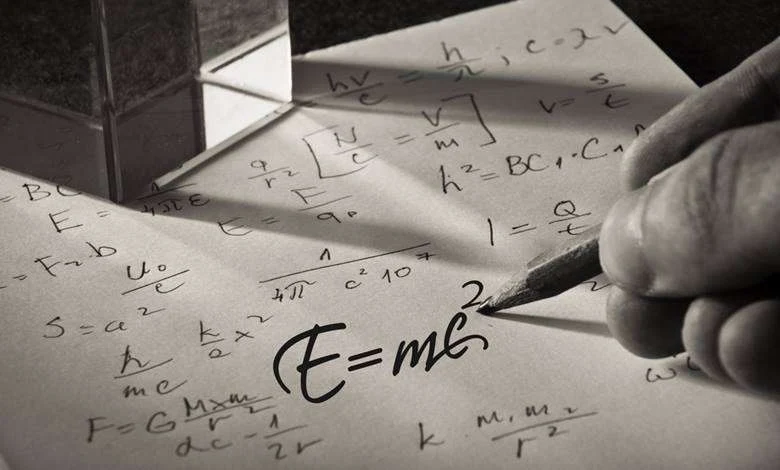
The story of E=mc² history is far richer than a single "Eureka!" moment: Albert Einstein published his famous derivation of mass-energy equivalence in 1905, but he was not the first to glimpse the connection between mass and energy. Before Einstein's landmark paper, pioneers like Fritz Hasenöhrl, Henri Poincaré, and even Oliver Heaviside had already wrestled with the same radical idea, setting the stage for the equation that would redefine physics. Their forgotten contributions reveal a scientific drama of brilliant minds, near-misses, and a race to understand the very fabric of reality, a story that makes Einstein's achievement both more human and more extraordinary.
The short version
In 1905, Albert Einstein published the equation E=mc², but he built on earlier work by physicists who had already proposed mass-energy relationships. Fritz Hasenöhrl and Henri Poincaré, among others, had published similar ideas in the years before Einstein, though Einstein's derivation was the most complete and became the standard formulation.
- In 1904, Austrian physicist Fritz Hasenöhrl published a paper suggesting that radiation in a cavity has an apparent mass proportional to its energy, a precursor to E=mc².
- In 1900, French mathematician Henri Poincaré proposed that electromagnetic radiation carries momentum and exerts pressure, implying a relationship between energy and mass.
- In 1889, Oliver Heaviside calculated that a moving electric charge's electromagnetic field behaves as if it has an increased mass, linking energy to inertia.
- Albert Einstein's 1905 paper "Does the Inertia of a Body Depend Upon Its Energy Content?" provided the first rigorous derivation of E=mc² from his special theory of relativity.
- The equation's full significance was only confirmed experimentally decades later, cementing Einstein's name while the earlier pioneers faded from popular memory.
The Most Famous Equation in Physics, and the Story We Got Wrong
E=mc² stands as the most recognizable equation in all of physics, and its elegant simplicity is exactly why it has captured imaginations for over a century. A system's energy (E) equals its mass (m) multiplied by the speed of light squared (c²), meaning mass is fundamentally a measure of the energy locked inside. In natural units where c equals 1, the equation collapses even further to E=m, revealing that energy and mass are essentially two faces of the same coin.
The popular story says Albert Einstein conjured this formula in 1905 and, in one stroke, explained how stars burn and nuclear explosions release their terrifying power. That narrative is a simplification. Einstein published his famous paper on mass-energy equivalence in 1905, yes, but he was not the first to glimpse this relationship, and he did not prove it with complete rigor within his own theory. The 1946 Time magazine cover famously showed Einstein's face beside a mushroom cloud, but contrary to what many remember, that cover did not actually print the equation. The formula appeared on a later cover entirely.
What the simplified story misses is a trail of physicists who spent two decades circling the same truth. In 1881, J.J. Thomson, the man who would later discover the electron, calculated the magnetic field generated by a moving charged sphere and showed that this field effectively gave the sphere additional mass. Oliver Heaviside simplified Thomson's work in 1889, arriving at m = (4/3) E / c², a strikingly close cousin to Einstein's later formula. John Henry Poynting published his theorem on electromagnetic energy conservation in 1884, and Henri Poincaré argued in 1900 that electromagnetic fields must carry momentum and therefore possess a kind of mass. Then came Fritz Hasenöhrl, who in 1904 built a thought experiment with a reflective cylinder filled with radiation, derived m = (8/3) E / c², caught his own error, and corrected it to m = (4/3) E / c². The road to E=mc² was paved long before Einstein's famous year, and the E=mc² history is far richer than a single flash of genius.
Before Einstein: The Pioneers Who Chipped Away at Mass and Energy
The story of E=mc² history begins decades before Albert Einstein's famous 1905 paper, with physicists who believed electromagnetism might be more fundamental than Newton's mechanics. In 1881, J.J. Thomson, the physicist who would later discover the electron, calculated the magnetic field produced by a moving charged sphere and showed that this field gave the sphere an apparent additional mass.
Thomson's result depended on the sphere's charge, radius, and magnetic permeability, but it was messy. In 1889, Oliver Heaviside simplified the work dramatically, deriving the elegant expression m = (4/3) E / c², where E represents the energy of the sphere's electric field. This became known as the "electromagnetic mass" of the classical electron, modeled as nothing more than a small, charged sphere.
Meanwhile, in 1884, John Henry Poynting published a theorem about energy conservation within electromagnetic fields, giving physicists a new framework to explore whether mass and energy might be conserved together. Then, in 1900, Henri Poincaré argued that the momentum of particles and the electromagnetic field must be conserved as a combined system, implying the field itself carries a kind of mass. He suggested the field behaves like a fluid, but he never explicitly connected this energy to the mass of real physical bodies. The pieces were slowly falling into place, each researcher adding a brick to a foundation Einstein would eventually stand on.
Fritz Hasenöhrl's Thought Experiment: Heat That Weighs Something
In 1904, a year before Einstein's famous paper, Austrian physicist Fritz Hasenöhrl built a thought experiment that brought physics tantalizingly close to the mass-energy relationship. He imagined a hollow cylinder with perfectly reflective inner walls and heated disks at both ends. When those disks warmed up, the cavity filled with radiation, and Hasenöhrl asked a deceptively simple question: how would this system look to someone moving past it at constant speed?
The answer hinged on the Doppler effect, the same phenomenon that makes a passing ambulance siren change pitch. Photons streaming from the end of the cylinder moving toward an observer would appear blue-shifted, carrying more energy and momentum. Photons from the opposite end would appear red-shifted, weaker and less forceful. The two ends no longer balanced each other, which meant an outside force had to account for the difference. Hasenöhrl turned to the work-energy theorem and concluded the radiation itself must possess mass. His first calculation gave m = (8/3) E / c², but he caught an error and corrected it in a third paper to m = (4/3) E / c².
That coefficient of 4/3 is striking, because Oliver Heaviside had already found the same factor in 1889 for the electromagnetic mass of a charged sphere. Hasenöhrl had independently arrived at a similar place by a completely different route, showing that even heat carries weight. Max Planck reportedly said in 1909 that Hasenöhrl was the first to demonstrate that blackbody radiation possesses inertia, though the exact wording and timing of that remark come down to us through secondary accounts rather than a fully verifiable record.
What makes Hasenöhrl's work remarkable is its boldness. He tackled a system with real spatial extent, a finite cavity, rather than a simple point particle. That choice was risky, since extended bodies behave awkwardly in relativity, but it also made his result more physically grounded. His E=mc² history moment came just one year before Einstein's own breakthrough, and both men would later attend the 1911 Solvay Conference, the first great gathering of physics luminaries, where they shared the same room.
Did Einstein Know About Hasenöhrl's Work?
Whether Albert Einstein read Fritz Hasenöhrl's 1904 papers on radiation and mass remains an open question, but the two men's paths certainly crossed. Both physicists attended the 1911 Solvay Conference in Brussels, the first international gathering of leading physicists, where they shared the same room. Given that Hasenöhrl published his findings in major physics journals of the era, it seems unlikely Einstein never encountered them, though no record confirms he did.
Einstein's famous 1905 paper, "Does the Inertia of a Body Depend Upon Its Energy Content?", is often misremembered as considering a single particle emitting radiation. Actually, Einstein's thought experiment involved a body emitting radiation in two opposite directions, a symmetrical setup that sidestepped complications. Hasenöhrl, by contrast, tackled a far bolder scenario: a finite-sized system, specifically a cylindrical cavity with perfectly reflective walls. That choice was risky, because extended objects behave awkwardly in special relativity, a problem that still troubled physicists years later.
Here is the uncomfortable part of the story. Einstein arrived at the correct relationship, E = mc², but he did not fully prove it within his own theory. He began his derivation with relativistic effects, then quietly neglected them near the end, leaning on classical approximations. That left genuine questions about how well the result held at extreme speeds. The equation was right, but the proof had gaps that later physicists would need to close.
So Who Really Deserves the Credit?
The honest answer is that no single person deserves the credit for E=mc² history, not even Einstein. The equation is the short, striking summary of a long, collaborative scientific journey that stretched across two decades and involved at least five brilliant minds. Einstein made the final conceptual leap in 1905, but he stood on a foundation built by others who came before him.
Einstein's real contribution was linking mass to a body's total energy content, not just to electromagnetic fields. His 1905 paper, Does the Inertia of a Body Depend upon Its Energy Content?, took the scattered pieces of earlier work and unified them into a single, breathtaking statement: mass and energy are interchangeable. That was the leap nobody else had fully made.
But credit must also go to Fritz Hasenöhrl, who in 1904 explicitly showed that heat has mass. His thought experiment with a reflective cylinder filled with radiation led him to first derive m = (8/3) E/c², then correct himself to m = (4/3) E/c². He came remarkably close to Einstein's formula, and as the story goes, Max Planck reportedly said in 1909 that Hasenöhrl was the first to show blackbody radiation has inertia.
Before Hasenöhrl, the path was paved step by step. J.J. Thomson in 1881 calculated the magnetic field of a moving charged sphere and showed it gave the sphere mass. Oliver Heaviside simplified that work in 1889 to get m = (4/3) E/c². John Henry Poynting proposed his theorem on electromagnetic energy conservation in 1884. And Henri Poincaré argued in 1900 that the electromagnetic field must carry momentum and therefore possess a kind of mass.
Even Einstein himself didn't fully prove the equation within his own theory. He started with relativistic effects but neglected them at the end, leaving questions about how strictly the relationship holds at high speeds. Both Einstein and Hasenöhrl attended the 1911 Solvay Conference together, though whether Einstein had read Hasenöhrl's papers before writing his own remains uncertain.
The most honest way to understand E=mc² history is as a relay race. Thomson passed the baton to Heaviside, who passed it to Poynting, then Poincaré, then Hasenöhrl, and finally Einstein crossed the finish line with the version the world remembers. Each runner added something essential, and the equation belongs to all of them.
Frequently Asked Questions About the E=mc² History
Who first derived E=mc²?
Albert Einstein published the exact mass-energy equivalence relation in 1905, but he was not the first to connect energy with mass. Several physicists before him, including J.J. Thomson in 1881, Oliver Heaviside in 1889, Henri Poincaré in 1900, and Fritz Hasenöhrl in 1904, all derived or suggested similar relationships between electromagnetic energy and inertial mass.
What did Fritz Hasenöhrl contribute?
In 1904, the Austrian physicist Fritz Hasenöhrl developed a thought experiment using a cylinder with perfectly reflecting inner surfaces. He showed that radiation (heat) inside the cylinder possesses mass, first deriving m = (8/3) E / c², then correcting his calculations in a later paper to arrive at m = (4/3) E / c², remarkably close to Einstein's eventual formula.
How did J.J. Thomson influence the concept?
In 1881, J.J. Thomson, the physicist who would later discover the electron, calculated the magnetic field produced by a moving charged sphere. He demonstrated that this field gives the sphere an apparent additional mass, laying the foundational groundwork for what became known as the electromagnetic mass concept, a crucial stepping stone toward E=mc².
What was Henri Poincaré's role?
In 1900, the French mathematician and physicist Henri Poincaré argued that the momentum of particles and the electromagnetic field must be conserved together as a single system. This implied the electromagnetic field carries a kind of mass, though Poincaré never explicitly linked that energy to the mass of physical bodies in the way Einstein later did.
Did Einstein know about Hasenöhrl's work?
It is not definitively known whether Einstein was aware of Fritz Hasenöhrl's 1904 papers on radiation mass. However, given that Hasenöhrl published in major physics journals of the era, it is considered unlikely Einstein remained unaware, and both men were present together at the 1911 Solvay Conference in Brussels.
Editor's note: Some details of the historical timeline and individual contributions remain debated among historians; where unconfirmed, they are presented as such.
What are your thoughts on this topic?
Every article is an open conversation. Whether you have a counter-argument, a local example, or a different perspective based on your own experience, your contribution makes this space better.
0 Comments