
In the sun-drenched summer of 1975, a remarkable intellectual adventure unfolded at NASA's Ames Research Center in California. A group of scientists, engineers, and visionaries gathered to ask a staggering question: How could humanity build a permanent, thriving home in the dark expanse of space? This was not a loose exercise in science fiction, but a highly structured study aimed at designing a realistic, cost-effective orbital community for 10,000 people using only the materials and technology available in the 1970s.
The short version
Led by physicist Dr. Gerard O'Neill, a joint team of NASA and Stanford University researchers spent the summer of 1975 designing three distinct orbital habitats. These spinning, self-contained cities were engineered to provide artificial gravity, protect residents from cosmic radiation, and run advanced agricultural systems, sparking a grassroots space-migration movement across the United States.
- The landmark study took place in the summer of 1975 at NASA's Ames Research Center in California.
- Physicist Dr. Gerard O'Neill led a team of researchers from NASA and Stanford University.
- The project designed cost-effective orbital habitats for 10,000 residents using 1970s technology.
- The team proposed three iconic structural models: the toroidal ring, the cylindrical tube, and the Bernal sphere.
The Three Blueprints of Our Future Space Habitats
To bring a community of thousands to life in the void, the research team had to solve the fundamental challenge of physics: how to keep human bodies healthy without the natural pull of Earth. The answer lay in rotation. By spinning these massive structures, they could generate artificial gravity, allowing residents to walk, build, and live normally. From this starting point, the team put forward three distinct structural designs that remain legendary to this day.
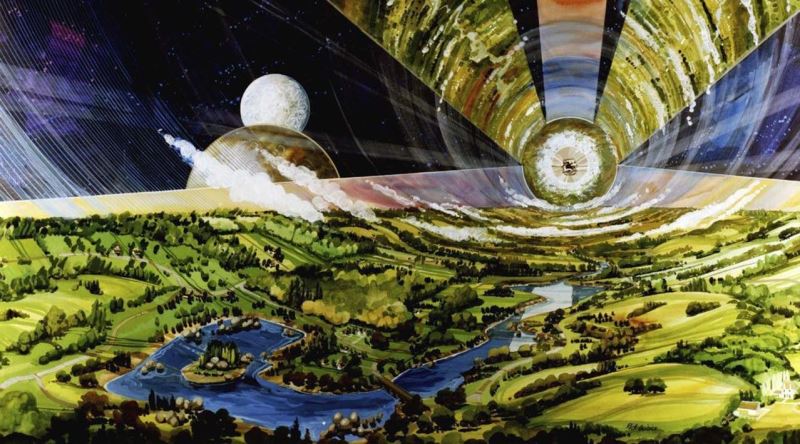
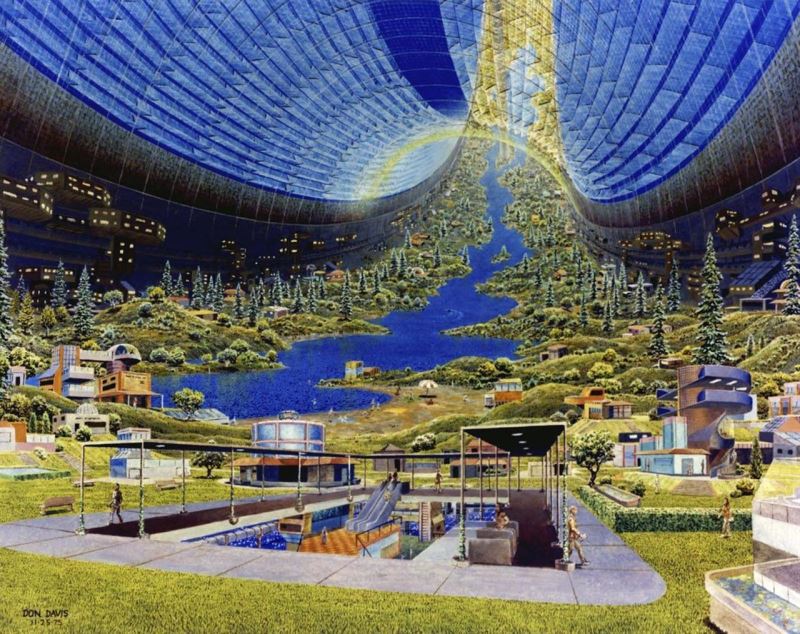
This design resembles a massive, slowly rotating donut. Standing inside the ring, you would look up to see a curved landscape of homes, parks, and terraced gardens arching directly over your head, all held in place by the gentle centrifugal force of the colony's rotation.
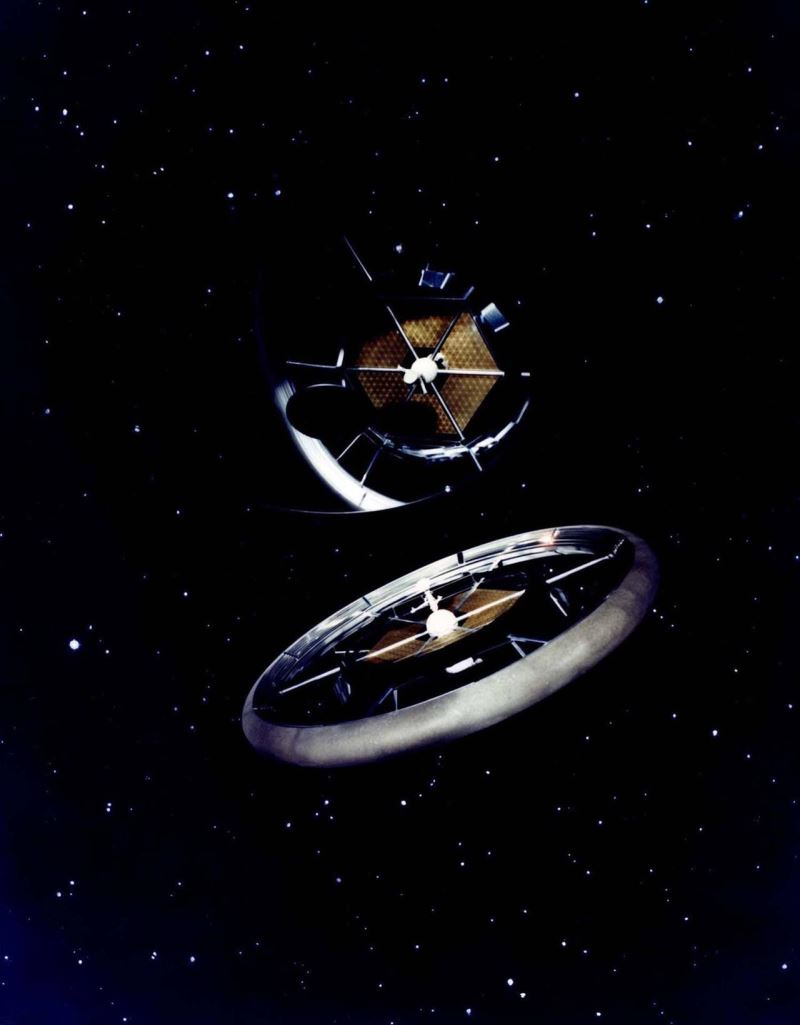
The Bernal sphere places its population on the interior surface of a giant globe. Residents would live along the equatorial region where the artificial gravity is strongest, while the lower-gravity poles of the sphere would be set aside for unique recreational activities and light industry.
This concept features massive, counter-rotating cylinders designed to eliminate gyroscopic effects. The interior walls would feature alternating strips of land and giant windows, creating vast, rolling valleys bent into a perfect loop that bask in natural sunlight.
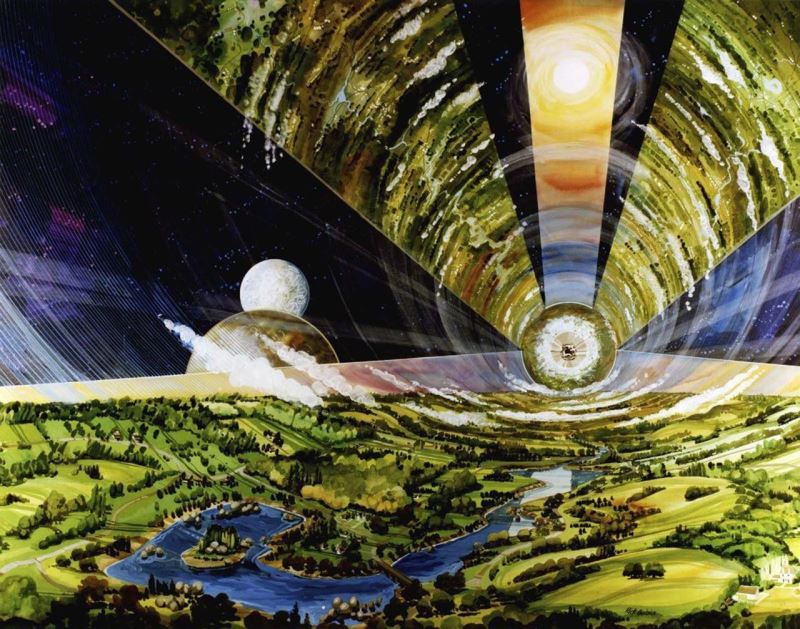
Each of these designs was envisioned as a fully self-contained world. Inside these structures, humans would live comfortable lives in custom-built neighborhoods, breathing controlled, artificial air under a simulated sky. Yet, the planners were careful not to let their imaginations drift too far from practical realities. They knew that building and maintaining these worlds would require a constant flow of resources, leading them to look closely at what lay beyond our atmosphere.

The Practical Realities of Living in a Closed-Loop World
Creating a beautiful illustration of a space colony is one thing, but keeping ten thousand people alive and healthy in a cold vacuum is a far grittier challenge. The 1975 research team spent weeks solving the invisible threats of cosmic radiation. To shield the inhabitants, they designed massive protective barriers and configured complex mirror systems to bounce natural sunlight into the habitat at gentle, earth-like angles, avoiding the harsh glare of direct solar radiation.
Agriculture was another cornerstone of the study. The planners designed highly advanced, pest-free farming systems where crops could grow continuously without the threat of terrestrial blights or weather disruptions, securing a reliable food supply for the population. Additionally, they engineered clever attitude control systems that could keep these massive spinning structures oriented toward the sun without relying on heavy, resource-consuming reaction engines.
While these orbital habitats were designed to be as self-contained as possible, they were not completely isolated. The 1975 study acknowledged that these early colonies would depend on regular shipments of raw materials and volatile substances from Earth or the Moon to replenish resources and sustain their delicate closed-loop ecosystems.
Asteroid Mining and the Birth of the L5 Society
To fuel this grand vision and reduce the heavy reliance on Earth's resources, the study proposed a bold economic engine: harvesting the mineral wealth of nearby asteroids. These cosmic rocks were seen as floating goldmines, rich in essential materials like cobalt, iron, nickel, and platinum. By mining these asteroids, the orbital communities could secure the raw materials needed for their own expansion and export valuable metals back to Earth.
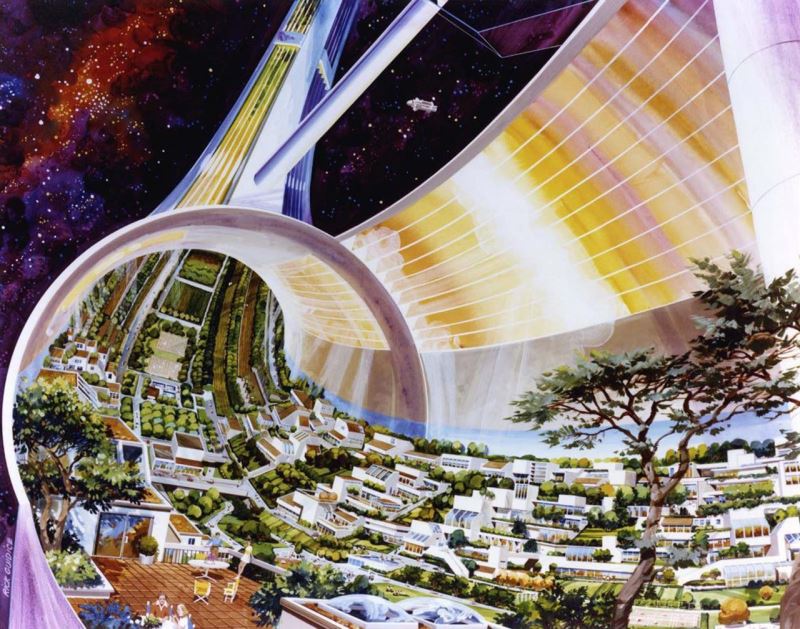
This provocative blend of rigorous engineering and economic promise captured the public imagination in a way few scientific studies ever do. It transformed dry physics equations into a dazzling, tangible dream of a new frontier. Suddenly, space was no longer just the domain of military test pilots and government agencies; it felt like a real place where everyday families could build a future.
This wave of public enthusiasm quickly crystallized into a genuine cultural movement. Inspired by the stunning hand-painted illustrations and the optimistic vision of the study, a group of dedicated space enthusiasts in the United States established the L5 Society. This grassroots organization was passionately committed to promoting, planning, and eventually building these orbital habitats, uniting thousands of people around the dream of living at the L5 Lagrangian point.
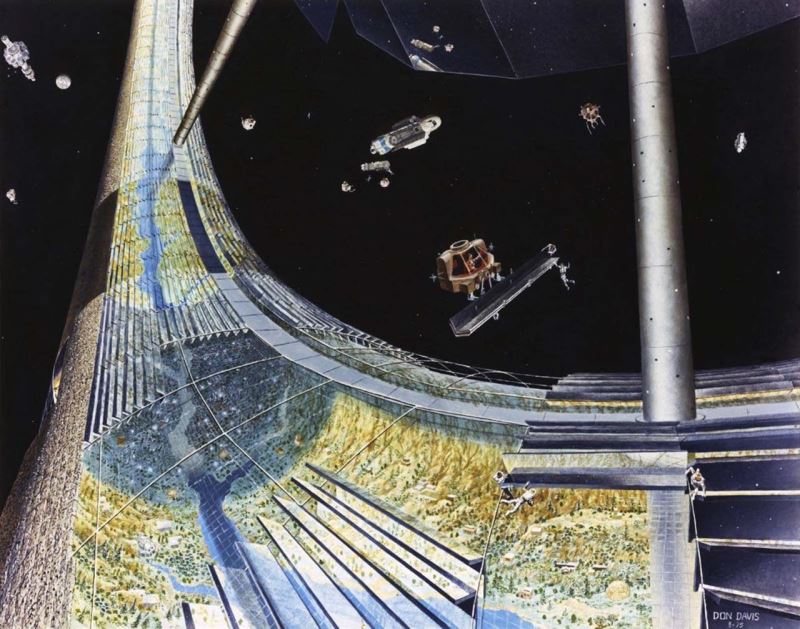
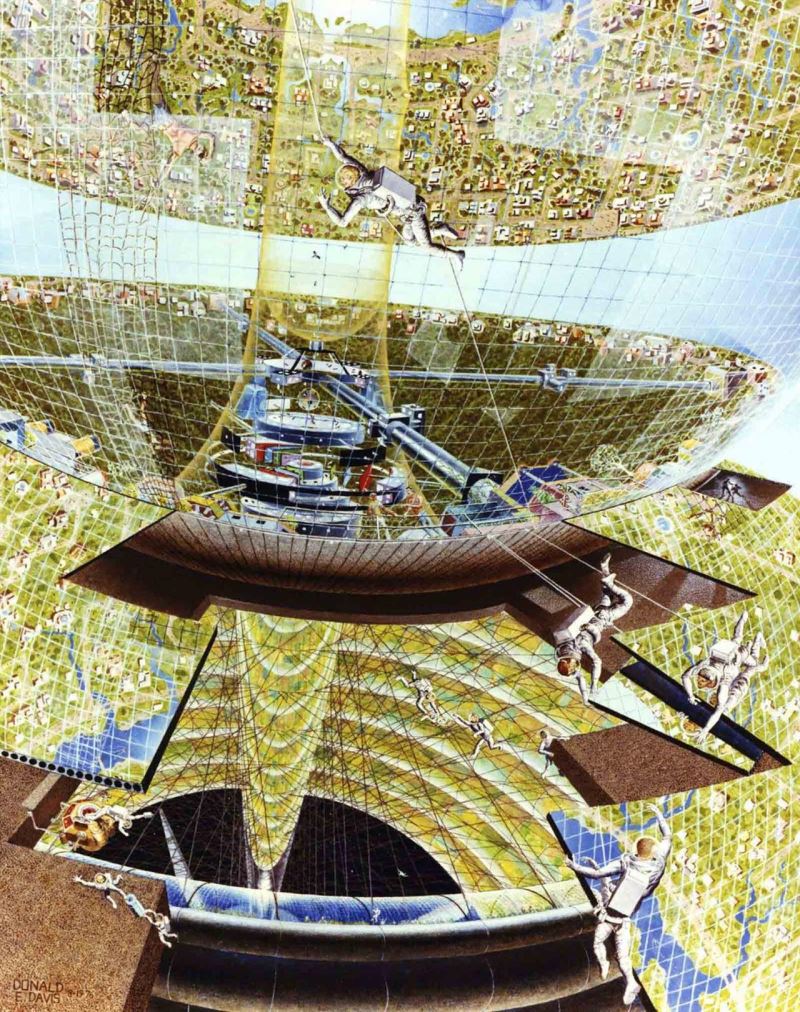
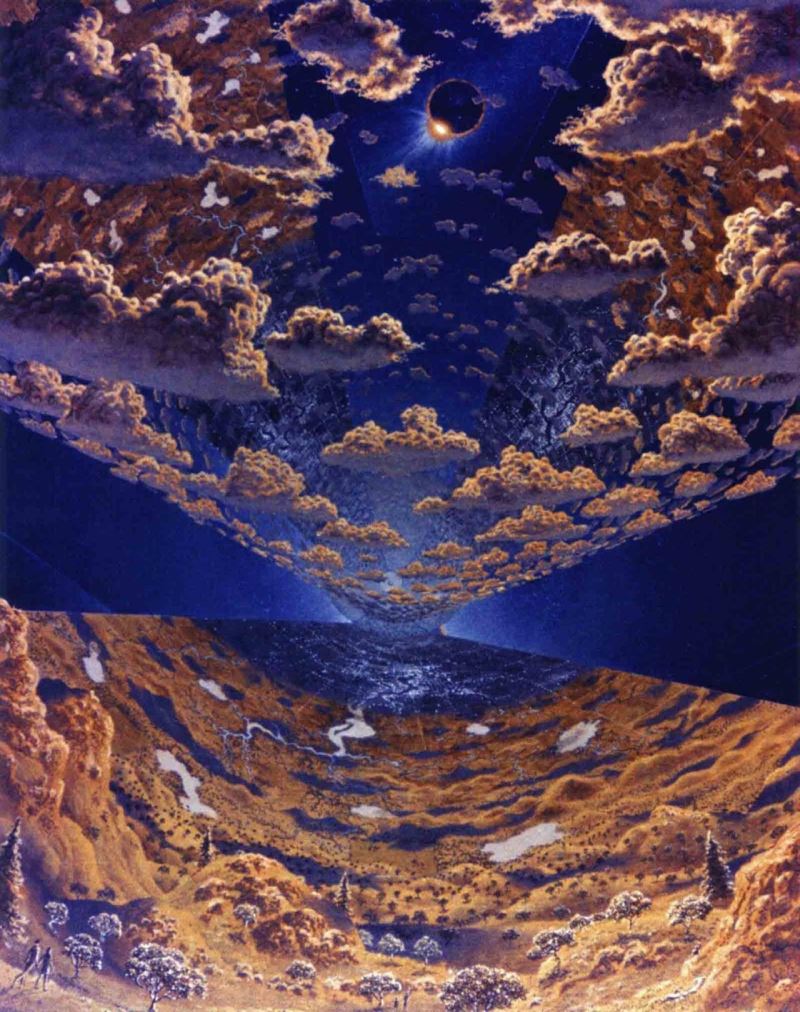
What began as a theoretical summer project in a California research laboratory ultimately escaped the drawing board to become a lasting piece of modern folklore, showing us a future where humanity's horizon is limited only by our willingness to build.
Frequently Asked Questions About Retro Space Habitats
The visionary concepts developed during the 1975 summer study continue to inspire scientists and dreamers alike. Here are the answers to some of the most common questions about these vintage orbital neighborhoods.
Who led the 1975 NASA space colony study?
The study was led by Princeton physicist Dr. Gerard O'Neill. He collaborated with a dedicated research team composed of scholars and scientists from both NASA and Stanford University.
What were the three primary habitat designs proposed by the team?
The team proposed three main designs: the toroidal colony (a donut-shaped ring), the cylindrical colony (counter-rotating tubes), and the Bernal sphere (a spherical habitat). All three relied on rotation to generate artificial gravity.
How did these colonies plan to secure raw materials?
The colonies were designed to harvest valuable minerals like cobalt, iron, nickel, and platinum from nearby asteroids. However, they still relied on regular shipments of volatile substances and raw materials from Earth or the Moon to maintain their ecosystems.
By the Editorial Staff
What are your thoughts on this topic?
Every article is an open conversation. Whether you have a counter-argument, a local example, or a different perspective based on your own experience, your contribution makes this space better.
0 Comments