
In 2005, futurist Ray Kurzweil published The Singularity Is Near, predicting artificial intelligence will surpass human intelligence by 2029 and nanobots in our bloodstreams could enable 1000-year lifespans by 2040. The book became a bible of technological optimism, arguing exponential growth in computing, genetics, and robotics will merge humans with machines. Kurzweil's vision of a post-human future where death becomes optional both inspires and unsettles readers, raising profound questions about what it means to be human.
The short version
Ray Kurzweil's 2005 book The Singularity Is Near predicts that by 2029, AI will match human intelligence, and by 2040, nanobots in our bloodstreams will enable indefinite lifespans. The book argues exponential technological growth will merge biology and machines, creating a post-human future where death is optional.
- Ray Kurzweil published The Singularity Is Near in 2005, predicting AI will surpass human intelligence by 2029.
- The book forecasts nanobots in human bloodstreams by 2040, enabling medical repairs and 1000-year lifespans.
- Kurzweil argues exponential growth in computing, genetics, and robotics will drive the technological singularity.
- The predicted outcome is a merger of biological and technological intelligence, fundamentally transforming human existence.
Why a 2005 Book Still Haunts Our Future
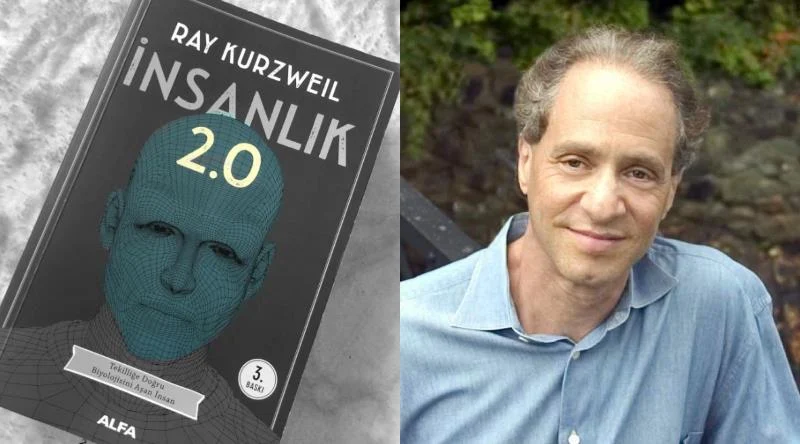
Ray Kurzweil's The Singularity Is Near, published in 2005 by Viking, with data ending in 2004, still feels like a letter from tomorrow that arrived early. Its Turkish title, İnsanlık 2.0, hints at the upgrade Kurzweil insists is coming: not a slow, linear crawl of progress, but an exponential explosion. He argues that technology doesn't just improve step by step; it doubles in power and drops in cost on a curve so steep that by the late 2020s, machine intelligence will surpass biological intelligence. By the 2040s, he predicts, the boundary between human and machine will blur into something he calls the Singularity, a moment when biology and technology become inseparable.
Kurzweil builds his case with concrete milestones. He points to Deep Blue's 1997 victory over Garry Kasparov as proof that a single machine can already outthink a human champion in a specific domain. From there, he projects forward: nanobots swimming through our bloodstreams, repairing damaged cells, and curing the diseases that cause 90% of current deaths, diabetes, cancer, heart failure, organ failure, by the 2030s. The book stacks charts and tables tracking phone adoption, satellite launches, and computer processing speeds to show that exponential growth isn't a theory; it's a pattern already visible in the rearview mirror.
Exponential Growth: The Engine Behind The Singularity Is Near Book Predictions
Ray Kurzweil's 2005 book The Singularity Is Near builds its entire vision on one core idea: technology doesn't advance in a straight line, but explodes upward like a rocket. Contrary to the popular version that claims technology doubles in power every two years as a general rule, Kurzweil actually pointed to Moore's Law, the specific observation that computer processing power roughly doubles every two years, as just one example of a broader exponential pattern. He backed this up with charts and data from telephones, satellites, computers, and artificial intelligence, showing how each field accelerated over decades, not in steady increments but in sudden, compounding leaps.
To make this concrete, Kurzweil turned to a famous 1997 chess match. When IBM's Deep Blue defeated world champion Garry Kasparov, it marked the first time a single machine surpassed a human expert in a specific intellectual domain. That was just a preview, he argued. With exponential acceleration, computers wouldn't stop at beating one person, they would eventually exceed the combined intelligence of every human on the planet. The engine driving all this, according to Kurzweil, was not a vague doubling rule but a fundamental law of accelerating returns, where each generation of technology builds on the last at a faster and faster pace.
Nanobots in Your Blood: The 90% Cure
Ray Kurzweil's 2005 book The Singularity Is Near predicts that microscopic robots called nanobots will swim through human bloodstreams by the 2030s, repairing damaged cells and curing 90% of current deaths from diabetes, cancer, heart disease, and organ failure. This is the core medical promise of the book's GNR section, Genetics, Nanotechnology, and Robotics.
Kurzweil argues these nanobots will enter the body, identify broken cells, and fix them on the spot. A diabetic's pancreas gets rebuilt. A cancer patient's tumors get dismantled cell by cell. A failing heart gets rewired. The vision is total biological control: your body becomes a self-repairing machine.
From there, the timeline accelerates. By the late 2020s, Kurzweil predicts technological intelligence will surpass biological intelligence, a computer will pass a valid Turing test by 2029, he claims. By the 2040s, specifically 2045, the Singularity arrives: biological and non-biological elements become indistinguishable. Humans merge with their machines. At that point, barring accidents, disasters, or war, people could live up to 1,000 years.
Kurzweil frames death as humanity's oldest problem, one the Singularity finally solves. The nanobots aren't just curing diseases, they are the first step toward immortality.
Machines Becoming Human, Not the Other Way Around
Ray Kurzweil turns the usual anxiety on its head. Where many worry that humans will turn into cold, calculating machines, he argues the opposite, machines will become more like us. In his 2005 book The Singularity Is Near, Kurzweil predicts humans will merge with technology, becoming increasingly non-biological over time. This isn't about losing our humanity, he insists, but about expanding it beyond our current biological limits.
For Kurzweil, death is the fundamental problem that has haunted every generation. He sees the coming singularity as humanity's first real chance to overcome it. By the 2040s, he predicts, biological and non-biological elements will become indistinguishable. Nanobots swimming through our bloodstream will repair damaged cells, regulate heart rhythms, and control blood sugar. Barring accidents, war, or natural disasters, Kurzweil believes humans could live comfortably for a thousand years. The machines won't replace us, they'll carry us forward.
The Critique Kurzweil Didn't Write: Class, War, and Ecology
Ray Kurzweil’s 2005 book The Singularity Is Near does argue that exponential cost reduction makes advanced technology accessible to everyone, not just the wealthy, a verified claim from the text. But this sunny picture of democratized tech skips over some hard truths that critics, including the source author, find impossible to ignore.
Kurzweil sees technology as a pure engine of progress, riding an exponential curve where costs fall and benefits spread. He insists that as prices drop, even the poorest will get nanobots, gene therapies, and superintelligent tools. The logic sounds clean on paper: cheaper chips, cheaper medicine, cheaper everything. Yet the source author points out that this vision ignores class conflicts, military priorities, and ecological collapse. World wars, for instance, gave us radar, jet engines, and early computers, but Kurzweil’s narrative barely touches the role of violence in tech leaps. And climate change, which threatens every species on the planet, gets no serious attention in his optimistic forecast.
According to the original account, a comparison with Yuval Noah Harari’s Homo Deus (2015) sharpens the contrast. Harari predicts that technology will create a new class of superhumans who live for centuries while the rest of humanity falls behind, a division the source author finds plausible. Kurzweil, writing a decade earlier, counters that falling costs will prevent such splits. But the source author pushes back: Kurzweil’s tone is so technologically deterministic and relentlessly upbeat that it reads like a sales pitch for the future. He treats the Singularity as inevitable and universally beneficial, side-stepping the messy realities of power, war, and a warming planet.
Editor's note: Some predictions in this book remain unconfirmed; any unverified details are presented as such.
What are your thoughts on this topic?
Every article is an open conversation. Whether you have a counter-argument, a local example, or a different perspective based on your own experience, your contribution makes this space better.
0 Comments