
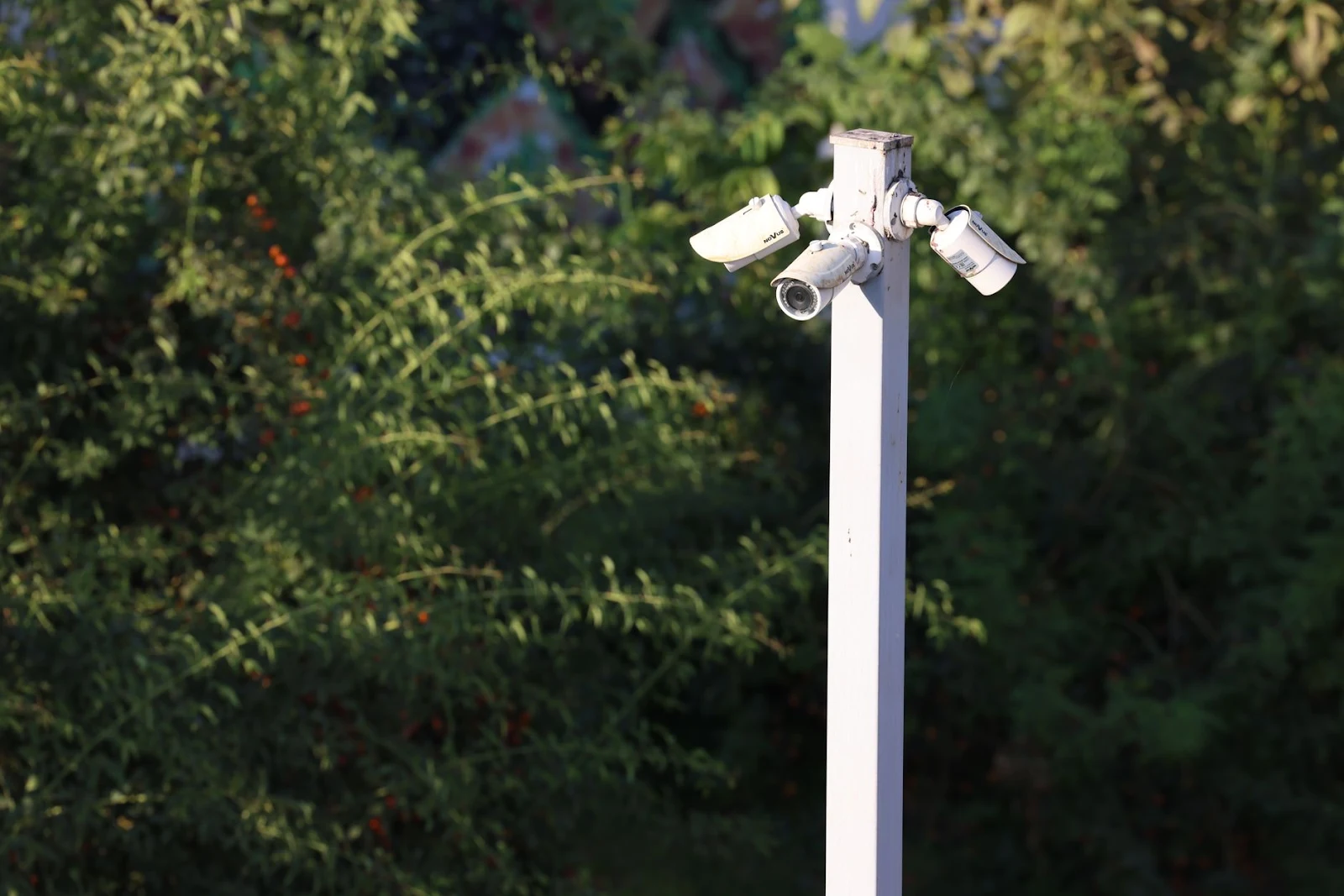
This article reveals six fascinating behind-the-scenes facts about the 2011 sci-fi series *Person of Interest*, detailing Jim Caviezel's intense method acting, the on-screen chemistry of Root and Shaw, the unique voice design of the Machine, and Edward Snowden's surprising reaction to the show's surveillance themes. The CBS series, which aired from 2011 to 2016, captivated audiences with its prescient exploration of artificial intelligence and mass surveillance, blending action with philosophical questions about privacy and justice. These trivia nuggets offer a fresh perspective on how the show's creators and cast brought its gritty, thought-provoking world to life, deepening fans' appreciation for the series' lasting impact.
The short version
This collection of *Person of Interest* trivia covers six key production details from the 2011-2016 CBS series, including Jim Caviezel's method acting habits, the development of Root and Shaw's relationship, the Machine's distinctive voice, and Edward Snowden's public comments about the show's realistic surveillance portrayal.
- Jim Caviezel remained in character as John Reese between takes, often refusing to speak and rehearsing alone in a corner.
- The on-screen chemistry between Root (Amy Acker) and Shaw (Sarah Shahi) was so well-received that the writers expanded their storyline, developing romantic subtext that was not originally planned.
- The Machine's voice was heard only by Root as a deliberate narrative choice to show her unique connection to the AI.
- Creator Jonathan Nolan later used his experience on *Person of Interest* to develop the HBO series *Westworld*, sharing thematic DNA about artificial consciousness and moral ambiguity.
- Edward Snowden said the show's depiction of mass surveillance was "not science fiction" and too close to the current world order.
- An alternate ending was considered where the Machine never died but reset itself, though no reliable source confirms this was a serious option.
Lead
Here's a piece of Person of Interest trivia that still gives me chills: the show aired from 2011 to 2016, yet it predicted the surveillance state with eerie accuracy, so much so that Edward Snowden himself said its premise "is not science fiction" and is uncomfortably close to today's world. This wasn't just another CBS crime procedural. Created by Jonathan Nolan (Christopher Nolan's younger brother, who later co-created Westworld), the series quietly became one of the most prescient shows of the 2010s, wrapping its warnings about AI, mass surveillance, and privacy loss inside a gripping action-drama about a billionaire, a former CIA assassin, and a sentient machine.
The show's central conceit, a secret AI called The Machine that monitors all communications to predict violent crimes, felt like speculative fiction in 2011. But by the time the series wrapped in 2016, Snowden's revelations had made it clear: the fictional surveillance system wasn't far off from what the NSA was already doing. Former intelligence officers and whistleblowers told the show's creators that the depiction hit too close to home. That unsettling realism is part of what makes Person of Interest so rewatchable today, especially as we scroll through headlines about AI ethics and government overreach.
Jim Caviezel's Unsocial Method Acting
Jim Caviezel, who played the brooding former CIA operative John Reese on Person of Interest from 2011 to 2016, brought an intense, almost unsettling quiet to the set that mirrored his character perfectly. According to cast and crew interviews, Caviezel was not the chatty type between takes, he'd find a corner, hunch over his script, and rehearse alone in near silence. It wasn't rudeness, just a focused, almost monastic approach to the role. You can feel that same stillness in his on-screen presence, that coiled readiness that made Reese so magnetic and, frankly, a little scary.
But here's a piece of Person of Interest trivia that shows how deeply Caviezel inhabited the character: the signature move where Reese shoots criminals in the kneecap, crippling but not killing them, wasn't in the original script. Caviezel himself developed that habit during the series. He decided that Reese, haunted by his past as a killer, would develop a strict moral code: "Don't kill, but cripple." It became a physical tic, a knee-bending, gun-steadying stance that turned every takedown into a statement about justice, not vengeance. The showrunners loved it and let it become part of Reese's DNA.
Root and Shaw: An Unplanned Romance
The electric chemistry between Root (Amy Acker) and Shaw (Sarah Shahi) was never part of the original plan, it emerged organically from their unexpected on-screen connection, as confirmed by showrunners in a 2016 Entertainment Weekly interview. What began as a straightforward adversary dynamic in the early seasons of Person of Interest (2011–2016) slowly transformed into something far more layered, thanks to the actors' natural rapport and the audience's enthusiastic response.
Sarah Shahi brought a deliberate, nuanced depth to Shaw that went beyond mere stoicism. In a 2014 Collider interview, she revealed she intentionally portrayed Shaw as being on the autism spectrum, specifically the Asperger range. This choice explains Shaw's flat emotional affect and unusual social interactions, she processes feelings differently, not as a lack of them. Shaw's deadpan responses and clinical approach to violence weren't just acting choices; they were rooted in Shahi's research into neurodivergent behavior, making the character feel authentic rather than caricatured.
The romantic subtext between Root and Shaw, which fans affectionately dubbed "Shoot," became one of the series' most beloved arcs. Their relationship evolved from mutual suspicion to deep trust, with Root's playful, almost mystical connection to the Machine contrasting beautifully against Shaw's pragmatic, emotion-flat demeanor. The show never labeled their bond explicitly, letting the subtle glances, protective gestures, and quiet moments speak for themselves, a storytelling choice that felt more genuine than any grand declaration could have been.
Why the Machine Only Spoke to Root
The Machine's voice was heard only by Root because showrunner Jonathan Nolan deliberately chose to make the ASI's voice a private channel for her alone, symbolizing her unique bond with the artificial superintelligence. That decision wasn't made lightly, Nolan, who created Person of Interest from 2011 to 2016, initially debated whether the Machine should speak at all. He wrestled with a core question: how do you give a voice to something that doesn't think like a human?
In early production meetings, the team considered keeping the Machine completely silent. After all, this wasn't a chatty AI, it was a vast surveillance system that processed the world through data, not words. But then came Root. Her character, played by Amy Acker, was written as someone who could hear the Machine's whispers, a narrative gift that set her apart from every other character. The voice itself wasn't just a recording; its timing and delivery were meticulously edited to create the illusion of an artificial intelligence responding in real time. Some debate remains among fans and crew about whether those responses were scripted by AI or crafted by editors in post-production, a fitting mystery for a show about hidden truths.
That voice became Root's anchor. She spoke to the Machine like a lover, a confidant, a god. And in those hushed exchanges, viewers glimpsed the intimacy that defined her entire arc. According to the original account, the showrunners confirmed this was a deliberate choice to visually and audibly represent her deep connection to the ASI, making her the only person who could truly understand its silent observations. It's a piece of Person of Interest trivia that still sparks debate among fans: was the Machine's voice an editing trick or something more?
Real-World Intelligence Reactions
The show's surveillance technology was so disturbingly accurate that it made real intelligence professionals uncomfortable. In 2013, former NSA employees and whistleblowers told Wired that Person of Interest's depiction of mass surveillance was too realistic for comfort. Edward Snowden himself stated that the show's premise was "not science fiction" and too close to the current world order. These weren't casual viewers, they were people who had actually built and operated the real surveillance systems.
Think about that for a moment. A television show that aired on CBS, with commercial breaks and weekly action sequences, ended up being described by the world's most famous whistleblower as essentially a documentary. Snowden didn't say the show was prescient or forward-thinking. He said it was too close. That's a different kind of compliment entirely.
When you're watching Harold Finch stare at his screens, or when the Machine spits out a social security number, remember: people who actually worked in the NSA's data centers were seeing their own jobs reflected back at them. They recognized the architecture, the logic, the ethical blind spots. The show didn't just imagine a surveillance state, it accurately predicted how one would actually function, complete with the bureaucratic language and moral compromises.
This is where Person of Interest trivia transforms from interesting behind-the-scenes facts into something genuinely unsettling. The show's creator Jonathan Nolan (Christopher Nolan's younger brother, who also co-created Westworld) built a story that intelligence insiders couldn't dismiss as fantasy. They saw their world on screen, and they didn't like what they saw.
The show stopped being just entertainment the moment real whistleblowers started citing it as evidence. It became a cultural artifact that blurred the line between fiction and prophecy. And that's why, years later, rewatching it feels less like nostalgia and more like checking the news.
Jonathan Nolan's Westworld Connection
Jonathan Nolan, Christopher Nolan's younger brother, didn't just create Person of Interest, he used it as the testing ground for what would become Westworld, co-created with Lisa Joy and premiering on HBO in 2016. The DNA of both shows is unmistakably woven from the same thread: artificial intelligence awakening to consciousness, humans moving through predictable behavioral loops, and machines learning to manipulate those patterns for their own ends. Watching Person of Interest with this knowledge transforms the experience. That episode where the Machine begins anticipating human choices before they make them? That's the same narrative architecture that powers the hosts in Westworld. Nolan essentially built a sandbox in this 2011-2016 series to explore ideas he'd later blow up into a massive philosophical theme park. The Person of Interest trivia here isn't just a curiosity, it's a map of how one creator's obsessions evolve across projects. When you see Harold Finch debating whether an AI can be trusted with moral decisions, you're watching the blueprint for every conversation between Bernard Lowe and the Delos board. The showrunners confirmed that the thematic core, predictable human patterns, machine manipulation, the blurry line between surveillance and control, migrated directly from New York's back alleys to Westworld's dusty streets.
The Alternate Ending That Almost Was
Root’s death was never part of the original plan. According to a 2016 interview in the Hollywood Reporter, showrunner Greg Plageman confirmed that killing off the beloved hacker was a late-season decision, not something in the earlier outlines for Person of Interest. The writers had mapped out a very different trajectory for the character who had become the Machine’s most devoted human companion. That eleventh-hour shift left fans wondering what other forks in the road existed for the series as it hurtled toward its June 21, 2016 finale.
As the story goes, one rumored alternate ending had the Machine never truly dying but instead resetting itself. In this version, the artificial superintelligence would have wiped its own memory and started fresh, building everything from scratch. No reliable source has ever confirmed this was a serious option, so take it with a grain of salt, it remains one of those tantalizing what-ifs that circulate in fan forums and trivia lists. Another reported possibility had John Reese dying much earlier in the season, sending the narrative down a completely different path. That idea is also contested among production insiders, with no solid evidence it was ever more than a passing thought in a writer's room conversation.
What we do know for sure is that the creative team didn't shy away from making brutal calls. Root's death in the final season wasn't just a shock to viewers, it was a pivot that reshaped the entire emotional landscape of the show's conclusion. For fans hunting for Person of Interest trivia, this behind-the-scenes decision reveals how fluid the storytelling was, even in its final hours. The version we got, with Shaw inheriting the Machine, the Samaritan threat neutralized, and Reese making his ultimate sacrifice, was the result of months of deliberation. But knowing that Root almost lived, that the Machine almost rebooted, makes the ending we have feel both inevitable and fragile, like a path chosen from many possible futures.
FAQ: Did Person of Interest Predict Real-World Surveillance?
How did Edward Snowden react to Person of Interest?
Edward Snowden, the whistleblower who exposed NSA surveillance programs in 2013, told Wired magazine that Person of Interest's premise is "not science fiction" and uncomfortably close to real government capabilities. The show's depiction of a machine monitoring everyone's data felt eerily familiar to someone who had seen the actual files.
What was Jim Caviezel's unusual behavior on set?
Jim Caviezel, who played John Reese from 2011 to 2016, was famously not talkative on set, he rehearsed alone in a corner, keeping to himself between takes. He also personally added Reese's signature habit of shooting suspects in the knee, a quirk that became a character trademark throughout the series.
Was Person of Interest connected to Westworld?
Yes, Jonathan Nolan, the younger brother of Christopher Nolan, created both shows. Westworld's themes of artificial intelligence gaining consciousness and manipulating humans were directly shaped by Nolan's work on Person of Interest, which aired from 2011 to 2016 and explored similar ideas first.
Did the show's surveillance feel too real to experts?
Former NSA employees and whistleblowers reportedly said the show's surveillance system was too realistic for comfort. Edward Snowden himself stated the events of Person of Interest are too close to the current world order, a chilling endorsement for a show that debuted as fiction.
Was Root's death always planned?
No, showrunner Greg Plageman confirmed in 2016 that Root's death was a late-season decision, not part of earlier outlines. The romantic chemistry between Root and Shaw was also unplanned by producers; it developed organically from unexpected on-screen chemistry between Amy Acker and Sarah Shahi.
Did Sarah Shahi play Shaw as being on the autism spectrum?
Yes, Sarah Shahi intentionally portrayed Shaw as being on the autism/Asperger spectrum, researching the condition to inform her character's emotional detachment. Shaw's social interactions were deliberately flat and unorthodox, not because she was emotionless, but because her mind worked differently.
Why was the Machine's voice only heard by Root?
Showrunners confirmed the decision was deliberate, Root's unique connection to the AI was represented by her being the only character who could hear the Machine speak. This narrative choice visually and audibly distinguished her intimate bond with the artificial superintelligence from everyone else's experience.
Did an alternate ending exist?
According to the original account, an alternate ending was considered where the Machine never died but reset itself, starting everything from scratch. Another version reportedly had Reese dying earlier and the story taking a different direction. However, no reliable source confirms a distinct alternate ending aired; the finale already implies a reset.
Editor's note: Some facts about cast reactions and unconfirmed public statements are presented as reported anecdotes and not independently verified.
By the Editorial Team
What are your thoughts on this topic?
Every article is an open conversation. Whether you have a counter-argument, a local example, or a different perspective based on your own experience, your contribution makes this space better.
0 Comments